Haringey council rubbish rules for Tottenham residents: a practical guide to bins, bulky waste and avoiding fines
If you live in Tottenham, rubbish collection can feel straightforward one week and oddly confusing the next. A missed collection, an extra black bag, a broken sofa on the pavement at the wrong time - suddenly you are wondering what Haringey council actually expects from you. This guide explains the Haringey council rubbish rules for Tottenham residents in plain English, with practical tips you can use straight away. It covers everyday bin use, recycling, bulky waste, side waste, garden clearances, and the common mistakes that lead to hassle. No drama, just the useful bits.
There is a lot of local variation in how waste is handled, even within London. Tottenham residents often need to juggle shared bins, flats, narrow streets, and limited storage space, which makes getting rubbish rules right more important than it sounds. If you are clearing a home, tackling a loft, or just trying to keep your front step tidy, the rules matter.
Table of Contents
- Why these rubbish rules matter in Tottenham
- How rubbish and recycling collection works
- Key benefits of following the rules
- Who this applies to
- Step-by-step guidance
- Expert tips for smoother disposal
- Common mistakes to avoid
- Tools, resources and recommendations
- Law, compliance and best practice
- Options and comparison table
- Real-world example
- Practical checklist
- Conclusion
- Frequently asked questions
Why Haringey council rubbish rules for Tottenham residents Matters
Rubbish rules are not just admin. They shape whether your street stays clean, whether bins get collected on time, and whether you avoid enforcement headaches. In Tottenham, where many homes sit on busy roads or in denser housing, a small mistake can turn into a blocked pavement, a missed collection, or complaints from neighbours. That is especially true when people leave bags out early or place bulky items next to the bins and hope for the best.
To be fair, most residents do not set out to break any rules. It is usually one of three things: the bins are full, the collection day changed in someone's memory but not in reality, or a clear-out got bigger than expected. You know how it goes. One shelf leads to a cupboard, the cupboard leads to half the spare room, and suddenly there is a mountain of cardboard and an old armchair leaning against the wall.
Following the local rules helps you stay on the right side of council expectations, but it also makes day-to-day life easier. Your property looks tidier, your shared bin area smells better, and you reduce the risk of attracting pests or fly-tipping attention. In a busy London neighbourhood, that is not a small thing.
Key takeaway: if you are living in Tottenham, the safest approach is to separate waste properly, put it out at the right time, and use the correct route for anything that is too large, heavy, or hazardous for the regular bin system.
How Haringey council rubbish rules for Tottenham residents Works
At a practical level, the system is built around three ideas: household refuse, recycling, and special disposal for larger items. Most households in Tottenham will have a regular collection day for general waste and, where provided, separate recycling containers. Flats and shared properties may have communal bins or shared service points, which means residents have to be especially careful about contamination and overfilling.
General rubbish usually means non-recyclable household waste such as used tissues, food-soiled packaging, broken items that cannot be recycled locally, and other mixed waste that does not belong in the recycling stream. Recycling is for clean, accepted materials. Think paper, cardboard, certain plastics, cans, and glass where the local service accepts them. If in doubt, it is better to check the category than to guess.
Then there are the awkward items. Mattresses, wardrobes, broken appliances, garden waste, bathroom fittings, builders' rubble, and office furniture are not normal bagged waste. These usually need a separate collection, a reuse route, or a dedicated removal service. This is where many Tottenham residents get stuck, especially during moves, refurbishments, or end-of-tenancy clean-outs.
For bigger clearances, local residents often compare council options with private clearance or rubbish removal support. If that sounds like your situation, a service such as waste removal in Tottenham can be useful when you need a faster or more flexible solution than waiting for council arrangements. For one-off room clearances, the right choice is often whichever is safest, cheapest overall, and least disruptive.
Typical waste categories you will deal with
- General household waste: non-recyclable everyday rubbish.
- Dry recycling: clean items that the local service accepts.
- Food waste: where provided separately.
- Garden waste: grass cuttings, branches, leaves, and similar organic material.
- Bulky waste: sofas, beds, wardrobes, tables, and large items.
- DIY and builders waste: plasterboard, wood, tiles, bricks, and similar materials.
- Electrical waste: kettles, microwaves, monitors, and appliances.
One useful way to think about it is this: if it fits neatly in the normal collection system, it probably belongs there. If it is oversized, heavy, messy, or potentially hazardous, it needs a different plan. Simple really - though, admittedly, rubbish rarely stays simple for long.
Key Benefits and Practical Advantages
Following the rubbish rules properly gives you more than just peace of mind. It improves the whole rhythm of managing a home or property in Tottenham. And yes, that sounds a bit grand, but it is true.
- Fewer missed collections: correct sorting and correct placement reduce the chance of the crew leaving items behind.
- Cleaner shared spaces: especially helpful in flats and maisonettes where bin areas get cramped quickly.
- Lower risk of complaints: neighbours are far less likely to object when bins are managed properly.
- Less pest attraction: food waste, open bags, and excess rubbish all make problems more likely.
- Better recycling performance: cleaner recycling means less contamination and less waste going to the wrong place.
- Safer streets and pavements: fewer obstructions for pedestrians, prams, wheelchairs, and delivery crews.
There is also a financial side. If you repeatedly put waste out incorrectly, you can end up needing extra collections, private removal, or a last-minute clear-up before a landlord inspection. A bit of planning avoids that awkward, slightly panicked Sunday afternoon where the hallway is full and nobody wants to own the mess.
Expert summary: the most efficient rubbish routine is not about doing more - it is about doing the right things in the right order. Sort early, bag safely, avoid overfilling, and separate anything bulky before collection day arrives.
Who This Is For and When It Makes Sense
The rules matter to almost everyone in Tottenham, but some people feel the pressure more than others.
Homeowners and tenants
If you are in a house, flat, or shared rental, you are the most likely to deal with overflowing bins, post-move waste, or furniture that no longer has a home. Tenants especially need to watch end-of-tenancy rules so they do not leave rubbish behind for the next person. Landlords can be surprisingly unforgiving about that, and fair enough.
Flat residents and shared properties
In blocks and maisonettes, one person's bad habits can affect everyone. If the bin store gets contaminated, the whole area can feel untidy and overused in no time. In these settings, it often helps to use a structured service like flat clearance support when a home needs a proper clear-out rather than a quick tidy.
Families and busy households
Families generate a lot of packaging, food waste, broken toys, and "keep for later" clutter. Rubbish management becomes less about one bin day and more about routine. If you have children, you already know how fast things pile up. One week the bag is half full; the next, it is a full-on balancing act.
People moving home or dealing with a bereavement
These are the moments when waste volumes jump. The right disposal route matters because you may have a mix of furniture, clothing, paperwork, and sentimental items to sort. In those situations, a measured approach is kinder and far less overwhelming. For larger domestic jobs, house clearance support can reduce the pressure when a property needs more than ordinary bin collections.
Small businesses and landlords
Shops, offices, and rental properties often produce waste that cannot simply go into domestic bins. Packaging, old stock, office chairs, and refurbishment debris need separate handling. If this sounds familiar, business waste removal may be a better fit than waiting for household collection rules to do the heavy lifting.
Step-by-Step Guidance
If you want the simplest possible way to stay compliant, use this process.
- Identify the waste type. Ask whether it is general rubbish, recycling, food waste, garden waste, bulky waste, or hazardous waste. If it is a mix, split it where possible.
- Check what can go in the normal bin. Bag loose household waste securely and avoid putting in liquids, sharps, batteries, or anything that could cause a mess or injury.
- Keep recycling clean. Rinse containers if required and do not "wishcycle" items you are unsure about. Contamination is a common issue, especially when people are in a hurry.
- Flatten cardboard and reduce volume. This sounds small, but it makes a big difference in tight bin stores and narrow Tottenham streets.
- Store waste safely until collection. Keep it out of walkways and away from rain where possible. Nobody wants soggy cardboard or a torn bag spreading rubbish down the path.
- Put bins out at the right time. Follow local collection timing rules for your property type. Early placement can cause obstruction problems, particularly on busy roads.
- Separate bulky items early. If you have furniture or appliances, do not wait until the night before collection to realise the sofa will not fit in the lift.
- Choose the right disposal route. Council collection, reuse, donation, private removal, or specialist waste handling may each suit different items.
- Remove items promptly after collection. Bring bins back in quickly and clear any leftover debris so the area stays tidy.
If your waste includes furniture, it is often worth comparing disposal routes before you lift a finger. For example, a service such as furniture disposal can be a practical option when a chair, bed frame, or table is no longer usable but still needs responsible removal.
A small real-world tip: measure awkward items before collection day. It takes two minutes and can save an hour of grunting, scratching walls, and muttered apologies.
Expert Tips for Better Results
Experience teaches you the stuff that doesn't always make it into a council notice. A few sensible habits make rubbish management much easier.
- Use the "one-touch" rule: if you pick something up and know it is rubbish, deal with it then and there. Do not put it down to sort later. Later has a way of becoming never.
- Keep a small sorting area: a crate, box, or spare bag for recycling, textiles, and general rubbish helps stop clutter from spreading.
- Hold back from overstuffing bags: split heavy waste into smaller bags so they do not split on the way out.
- Label problem items for later: batteries, electronics, and paint tins deserve separate treatment. They are easy to forget.
- Think about timing around weather: a damp evening in Tottenham can turn cardboard into an awkward, flabby mess fast.
- Use private clearance for mixed loads: if your waste includes a bit of everything, a flexible service can save time and repeated handling.
Another helpful habit is to keep an eye on furniture and storage spaces before they become a dumping ground. A loft, garage, or spare room can quietly fill up with broken lamps, bags of old clothes, and cardboard boxes. When that happens, a focused clear-out is usually more effective than trying to chip away at it in tiny bits. For those cases, loft clearance or garage clearance can be the cleaner route.
And honestly, there is a kind of relief when a space is properly cleared. You hear the floor again. No joke. You can actually walk in without sidestepping three mystery objects and a broken umbrella.
Common Mistakes to Avoid
Most waste problems are not dramatic. They are small mistakes that keep repeating.
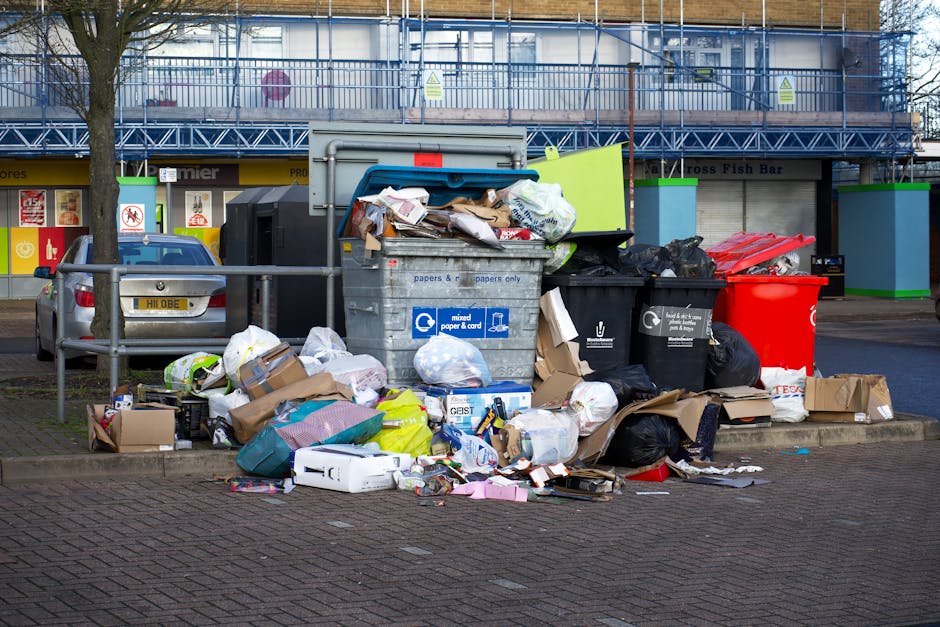
- Leaving rubbish beside bins: if it is not inside the correct container or collection point, it may be treated as fly-tipping or refused waste.
- Mixing recycling with food waste: one greasy box can spoil a whole bag of otherwise good recycling.
- Putting out waste too early: this can cause clutter, obstruction, and complaints from neighbours.
- Ignoring bulky item rules: a sofa is not the same as a black bag, no matter how badly you want it gone.
- Forgetting about shared responsibility: in communal buildings, one person's poor sorting can affect the whole block.
- Assuming DIY waste is household waste: rubble, tiles, and renovation debris often need a separate disposal plan.
- Underestimating volume: what looks like "a few items" can turn into two van loads once you start.
A very common Tottenham scenario goes like this: someone clears a room, stacks items by the front door, and then decides to leave them out because "the council will probably take it." Sometimes that works. Often it doesn't. Better to know first than improvise and hope.
Tools, Resources and Recommendations
You do not need fancy equipment to manage rubbish well, but a few simple tools make life easier.
- Strong bin liners: use bags that suit the waste weight and do not split easily.
- Labels or marker pens: useful for separating donations, recycling, and items to keep.
- Work gloves: particularly for lofts, garages, or garden waste where sharp edges are common.
- A tape measure: helpful before arranging removal of bulky furniture or appliances.
- Stacking boxes or crates: ideal for sort-and-remove projects in flats or family homes.
For bigger jobs, it is worth comparing the practical routes rather than defaulting to the nearest option. For example, an office clearance service can be useful for desks, filing cabinets, and mixed equipment, while builders waste clearance is better suited to renovation debris and heavier construction materials.
If you are working through a whole-property clear-out, you may also want to look at home clearance or the broader house clearance option. The right fit depends on whether you are dealing with a single room, a full property, or a mix of household and non-household waste.
For residents who prefer a transparent service journey, it can also help to understand pricing and quotes before arranging collection. And if you want reassurance on handling and disposal standards, the site's recycling and sustainability information is a sensible place to start.
Law, Compliance, Standards, or Best Practice
In the UK, waste has to be handled responsibly, and that includes household and commercial rubbish. You do not need to memorise legislation to get this right, but you do need to understand the basic principle: waste should go into the correct stream, be stored safely, and be passed to an appropriate collector when required.
For Tottenham residents, the main compliance risks usually come from three things: leaving rubbish in the wrong place, mixing controlled waste with ordinary household waste, and failing to arrange proper collection for bulky or non-standard items. Fly-tipping is the obvious one, but there are also nuisance and safety issues when waste blocks pathways, entries, or shared bin stores.
Best practice is simple enough:
- keep waste contained;
- separate recyclables from general rubbish;
- do not place items out unless you are sure they are due for collection;
- use a suitable removal route for large, hazardous, or commercial waste;
- retain any booking details or collection confirmation where relevant.
When a job goes beyond ordinary household disposal, a responsible clearance provider can help reduce risk. That is especially useful where there are mixed materials, heavy furniture, or awkward access. The same careful approach matters whether you are clearing one room or a full property after years of build-up.
Practical note: if you are unsure whether something counts as normal rubbish or a special waste item, treat it as the special case until you have checked. That is usually the safer, less messy choice.
Options, Methods, or Comparison Table
Choosing the right disposal method depends on the type of waste, how much of it you have, and how quickly it needs to go. This comparison should help you decide without overthinking it.
| Option | Best for | Advantages | Limitations |
|---|---|---|---|
| Regular council collection | Everyday household rubbish and accepted recycling | Simple, familiar, usually the most direct route for standard waste | Not suitable for bulky, heavy, or unusual items |
| Bulky waste or scheduled special collection | Large household items | Designed for sofas, beds, and similar pieces | May involve booking rules, item limits, or waiting time |
| Private waste removal | Mixed loads, urgent jobs, or awkward access | Flexible, fast, useful for bigger clearances | Usually costs more than standard bin disposal |
| Reuse or donation | Usable furniture and household goods | Can reduce waste and help others | Items must be in decent condition and accepted by the recipient |
| Specialist clearance | Lofts, garages, offices, gardens, builders waste | Good for structured clear-outs and mixed materials | Needs the right service for the right job |
For furniture-heavy jobs, a dedicated route often makes the most sense. If the item still has life in it, furniture clearance can be a sensible middle ground between leaving it to the bin system and trying to shift it all yourself.
Case Study or Real-World Example
Here is a common Tottenham-style scenario. A family in a terraced house clears out a spare room before a child moves in. What starts as "just a few things" turns into broken shelving, a mattress, two boxes of mixed charity items, some cardboard, and an old desk that has seen better days. The black bin is already full from the week before. Classic.
At that point, the family has three choices. They can try to push everything into the normal bins and risk missed collection. They can wait and hope the items somehow become less awkward. Or they can sort the load properly: recycling in one pile, reusable items in another, and bulky waste handled separately.
They choose the third route. The room clears faster, the hallway stops feeling blocked, and the bin area stays tidy. The desk goes out with a suitable removal plan. The mattress and shelving are handled without drama. It is not glamorous, but it works. And that matters.
That kind of clear-out is exactly where a structured service can help, especially if the waste is too much for normal collection. For residents facing a bigger domestic project, a service like home clearance gives a practical way to deal with several item types in one go, rather than handling each bit separately.
Practical Checklist
Use this quick checklist before you put anything out.
- Have I sorted the waste into the right category?
- Is everything bagged, tied, and safe to lift?
- Have I removed liquids, batteries, sharps, or anything hazardous from the pile?
- Is the recycling clean and accepted locally?
- Is this item too big for the normal bin service?
- Do I need a special collection or private removal?
- Have I checked whether the waste can be reused or donated?
- Is the waste stored neatly and not blocking access?
- Do I know the collection time and date?
- Will the area be easy to tidy after collection?
If you can answer yes to most of those, you are in good shape. If not, pause and re-check. It saves hassle later. Usually.
Conclusion
For Tottenham residents, rubbish rules are really about common sense backed by local process. Sort waste carefully, use the right bin or collection route, and do not treat bulky or mixed waste like a normal bag of household rubbish. Once you get that rhythm right, everything becomes easier: the street stays cleaner, the bin store feels calmer, and you avoid those annoying last-minute disposal scrambles.
Truth be told, most waste problems are solved by planning a little earlier than feels necessary. That one extra check before collection day can save you a lot of time, and a fair bit of frustration too. If your clear-out is bigger than the normal bin system can handle, look at the most suitable removal route rather than forcing it into the wrong one. That is the difference between a smooth job and a messy one.
If you are dealing with furniture, mixed household waste, garden cuttings, office items, or a bigger property clear-out, it may be worth exploring the relevant service pages and choosing the option that fits your situation best. A tidy solution now is usually the easiest solution later.
Get a free quote today and see how much you can save.
Frequently Asked Questions
What are the main Haringey council rubbish rules for Tottenham residents?
The basics are to separate general waste from recycling, use bins correctly, avoid overfilling, and arrange proper disposal for bulky, hazardous, or non-standard items. Shared properties need extra care because one household's mistake can affect the whole bin store.
Can I leave extra bags beside the bin if it is full?
Usually not, unless a specific arrangement has been made. Extra bags outside the bin area can be treated as fly-tipping or refused waste. If you regularly run out of space, it is better to reduce volume or arrange a bigger clearance route.
What counts as bulky waste in Tottenham?
Bulky waste generally includes large items such as sofas, beds, wardrobes, tables, and some appliances. These items usually need a separate collection or removal service rather than the normal household bin.
Can I put broken furniture in the normal rubbish bin?
No, not if it is too large or heavy for the standard collection system. Smaller broken pieces may fit, but larger furniture usually needs a dedicated disposal method. That is where furniture clearance or furniture disposal can be more practical.
What should I do with garden waste?
Garden waste such as grass cuttings, leaves, and branches should be handled according to the local collection rules or taken through an appropriate clearance route. Do not mix it with general household rubbish if a separate option is available.
How do I deal with waste from DIY or building work?
DIY waste often needs special handling because it can include rubble, timber, plasterboard, and other heavy materials. Builders waste clearance is usually the sensible option for this kind of load.
What happens if I put recycling in the wrong container?
Contaminated recycling may be left uncollected or treated as general waste. A small amount of contamination can spoil a whole bag or container, so it pays to check the accepted materials before putting them out.
Do flats in Tottenham follow different rubbish rules?
The core principles are similar, but flats often use communal bins, shared storage, and tighter access. That means residents need to be more careful about sorting, timing, and keeping the bin area clear.
Is private waste removal worth it for a small amount of rubbish?
Sometimes, yes. If the items are awkward, urgent, too bulky for normal collection, or mixed with furniture and other clutter, private waste removal can save time and avoid repeated trips to try to sort things out yourself.
How can I tell if something should be reused instead of thrown away?
If an item is clean, functional, and safe to use, it may be better suited to reuse or donation. If it is damaged, stained, broken beyond simple repair, or no longer safe, disposal is usually the right path.
What is the safest way to prepare rubbish before collection day?
Bag waste securely, flatten cardboard, separate recyclables, keep sharp items wrapped, and avoid overloading bags. Store everything neatly so it does not block access or create a trip hazard.
Where should I start if I have a big clear-out in Tottenham?
Start by sorting the waste into categories, then decide whether it fits normal collection, bulky waste, or a more flexible clearance option. If the job is bigger than expected, a structured service such as house clearance, flat clearance, or office clearance can make the process much easier.
And if you are still staring at that growing pile by the front door, take a breath. You do not need to solve everything at once - just the next sensible step.